

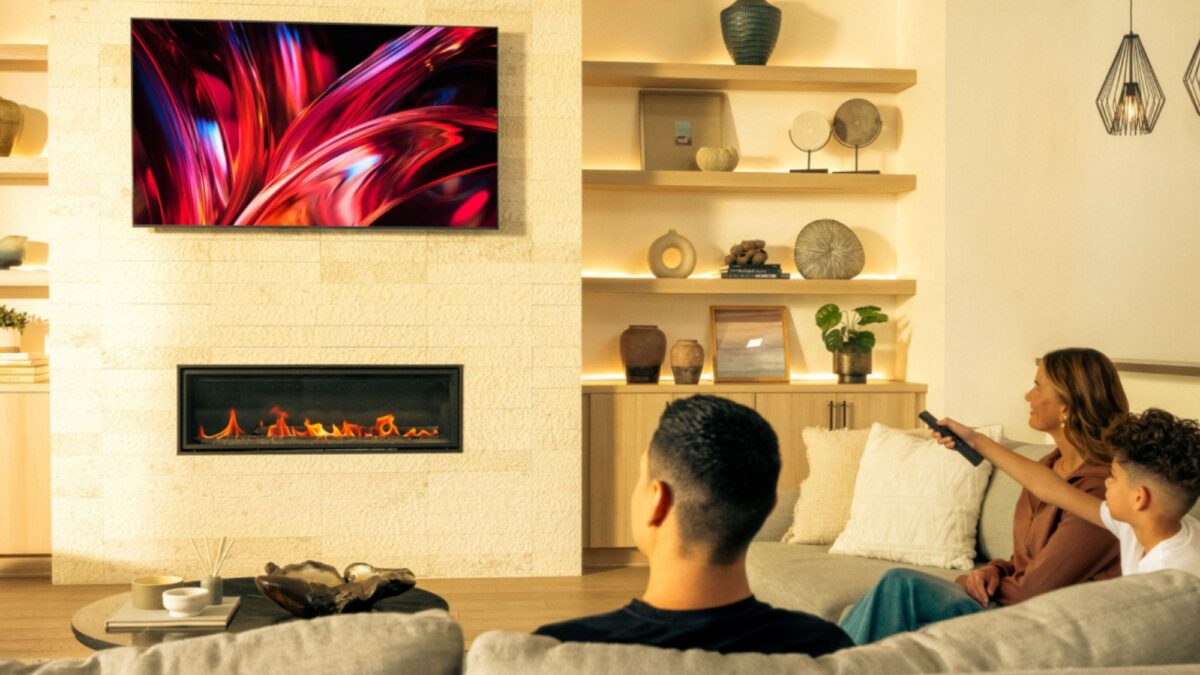
It’s a classic living room dilemma: do you go for the absolute brightest screen on the market, or do you trust the technology that has delivered perfect blacks for years? With the launch of the Sony BRAVIA 9 II and the BRAVIA 8 II, Sony has forced us to make a choice between the future of Mini LED and the mastery of QD-OLED.
Most of us are drawn to the newest, loudest tech. The BRAVIA 9 II arrives with "True RGB" Mini LED marketing, promising to banish reflections and light up your darkest cave. Meanwhile, the BRAVIA 8 II sits quietly below it, $300 cheaper, offering the infinite contrast of OLED. After digging into the specs and real-world usage, the answer might surprise you: for many households, the "older" OLED tech isn't just holding its ground—it’s the smarter buy.
Daylight Dominance: The True RGB Advantage
The BRAVIA 9 II wasn't built for midnight movie marathons; it was built for the 4 PM sunbeam that hits your TV just right. Its matte glass coating, developed in tandem with Sony Pictures, is a game-changer. It absorbs light rather than reflecting it back at you.
If your living room is a glass box with south-facing windows, skylights, and zero blackout curtains, the 9 II is your champion. It pumps out higher peak brightness that cuts through glare effortlessly.
- Best for: Open-plan living rooms with heavy natural light.
- The Trade-off: You’re paying a premium for brightness that most people can’t fully utilize in a dark room.
Infinite Black: Why QD-OLED Wins After Dark
Flip the switch, and the narrative changes. The BRAVIA 8 II uses QD-OLED panels, meaning every pixel can turn off completely. When a movie scene drops to a night interior or a letterboxed epic, those black bars vanish into the bezel.
The BRAVIA 9 II, despite its advanced backlight, still struggles with the laws of physics. Owners are already reporting a faint green halo around yellow subtitles on dark backgrounds—a classic blooming issue. While you can hide it by changing subtitle colors, the 8 II simply doesn't have this problem. It delivers pure, unadulterated contrast right out of the box.
- Best for: Movie buffs and dark room viewing.
- The Reality: No backlight has ever matched the depth of a switched-off pixel.
Gaming & Motion: Speed vs. Smear
If you’re plugging in a console, the BRAVIA 8 II is the clear winner. OLED pixels switch instantly. On the 9 II, the liquid crystal response is slower, and the RGB backlight chasing the image adds lag. Gamers have already noted "smearing" in fast-paced titles and racing games, plus the frustration of having "Reality Creation" greyed out in Game Mode on the newer model.
However, if you watch a lot of film, the 9 II has a secret weapon: 24p judder handling. OLEDs often struggle with slow panning shots, forcing you into motion interpolation settings that create the dreaded "soap opera effect." The 9 II’s liquid crystal blur naturally masks this judder, giving you smoother films without the menu tweaking.
- Gaming Pick: BRAVIA 8 II for speed and sharper response.
- Movie Pick: BRAVIA 9 II for natural motion handling.
Sound & Seating: The "Bad Chair" Test
How many people are watching? If you have a large sectional sofa, the BRAVIA 8 II shines. OLED panels maintain picture quality at extreme angles. Move to the far end of the couch with the 9 II, and contrast starts to drop off; you might even find yourself fighting for the "good seat."
Sound-wise, Sony’s BRAVIA 8 II uses actuators to vibrate the screen itself, turning the display into a speaker. Dialogue comes directly from the actor’s mouth rather than firing from speakers below. It’s a subtle touch that adds a layer of realism beam tweeters just can't replicate.
The Verdict: Which Sony TV Belongs on Your Wall?
The decision ultimately comes down to your environment and your wallet. The BRAVIA 9 II ($3,599 for 65”) is a specialist tool for bright rooms and massive scale (available up to 115 inches, unlike the 8 II which caps at 65”). It’s also the safer bet if you leave news channels running all day and worry about OLED burn-in.
However, for 90% of us, the BRAVIA 8 II ($3,299 for 65”) is the one to take home. It offers superior black levels, wider viewing angles, better gaming performance, and richer sound—all while keeping more money in your pocket.
Don’t pay for the True RGB premium if you’re just going to draw the curtains every evening. If your room allows it, the QD-OLED magic of the BRAVIA 8 II will deliver the cinematic experience you’ve been searching for.