

Picture this: you’re sitting on a train with a fresh melody looping in your head, but your hands suddenly freeze. Chord inversions, shifting scale degrees, and rigid music theory rules feel like a heavy wall instead of a creative bridge. If you’ve ever wanted to lay down rich, professional chord progressions on the go without carrying bulky studio gear or spending years memorizing keyboard layouts, you’re definitely not alone. That exact frustration is what mobile producers and gigging musicians search for daily—and it’s precisely where a newly designed harmony synthesizer steps in to completely change the creative workflow.
A Static Grid That Actually Makes Sense
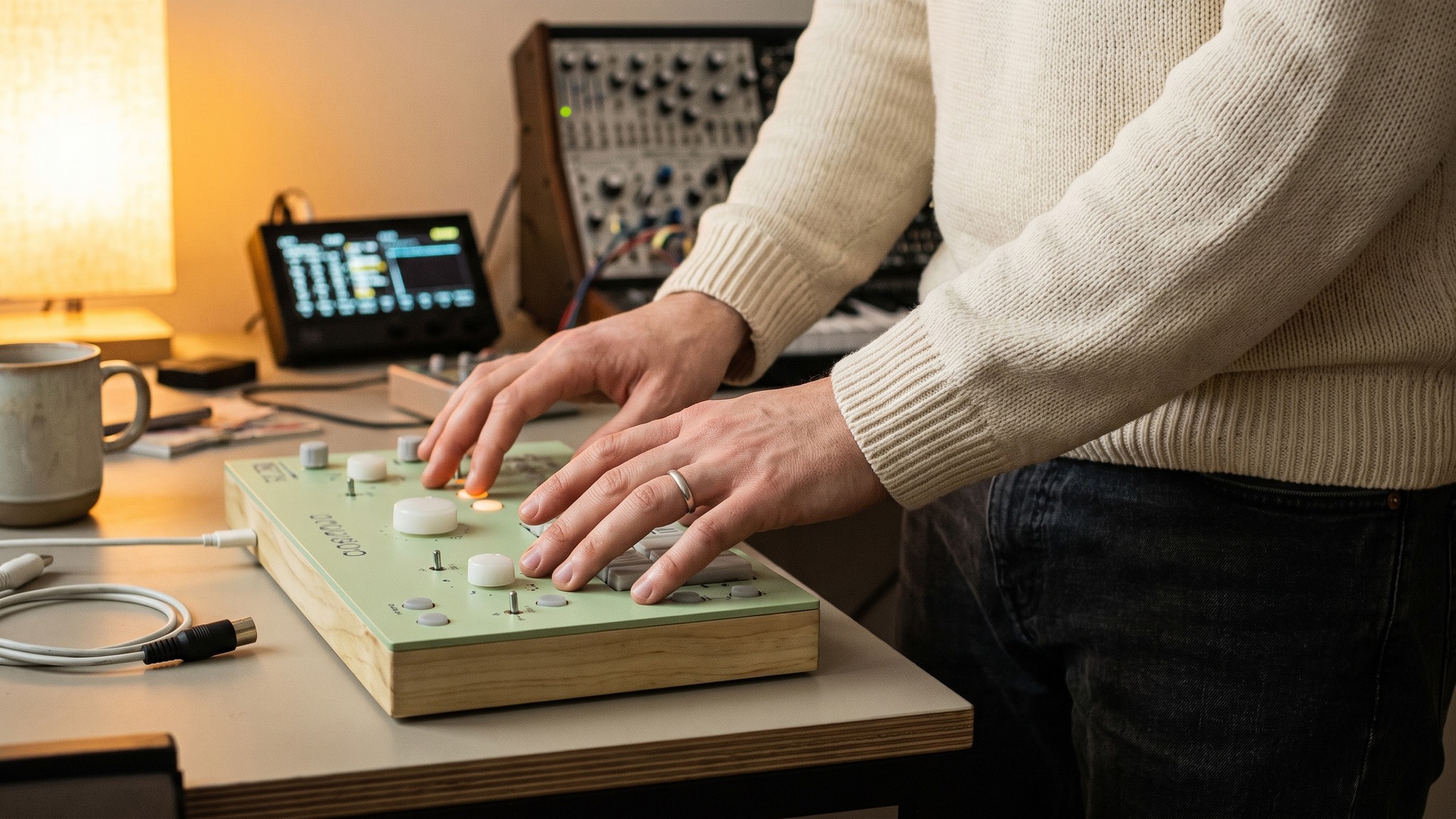 NOPIA completely reimagines how we approach harmony on the fly. Instead of forcing you to memorize dozens of awkward chord shapes across a traditional piano keyboard, it uses a clean, static layout that maps every key as simple scale degrees. You navigate chord progressions in one consistent framework, which means you spend significantly less time thinking about finger placement and more time listening to the vibe. Whether you’re sketching a jazz progression in a quiet hotel room or building a moody ambient track at a weekend café, the interface removes the guesswork. It turns abstract music theory into something tactile, visual, and deeply intuitive.
Real Sound, Zero External Gear Needed
 Most MIDI chord controllers force you to tether yourself to a laptop or an expensive sound module, but NOPIA brings a full hybrid sound engine straight to your desk. It seamlessly blends sample-based realism with virtual analog warmth across four dedicated sound modules: Keys, Bass, Arp, and Pad. You get immediate, studio-quality audio without opening a single plugin or dealing with latency. Want to layer a vintage electric piano under a sweeping analog pad while a bassline locks into the groove? Just twist a dial. The onboard engine is designed to stand completely on its own, making it a true semi-modular harmony instrument rather than just another trigger pad.
Strum, Bend, and Route Like a Pro
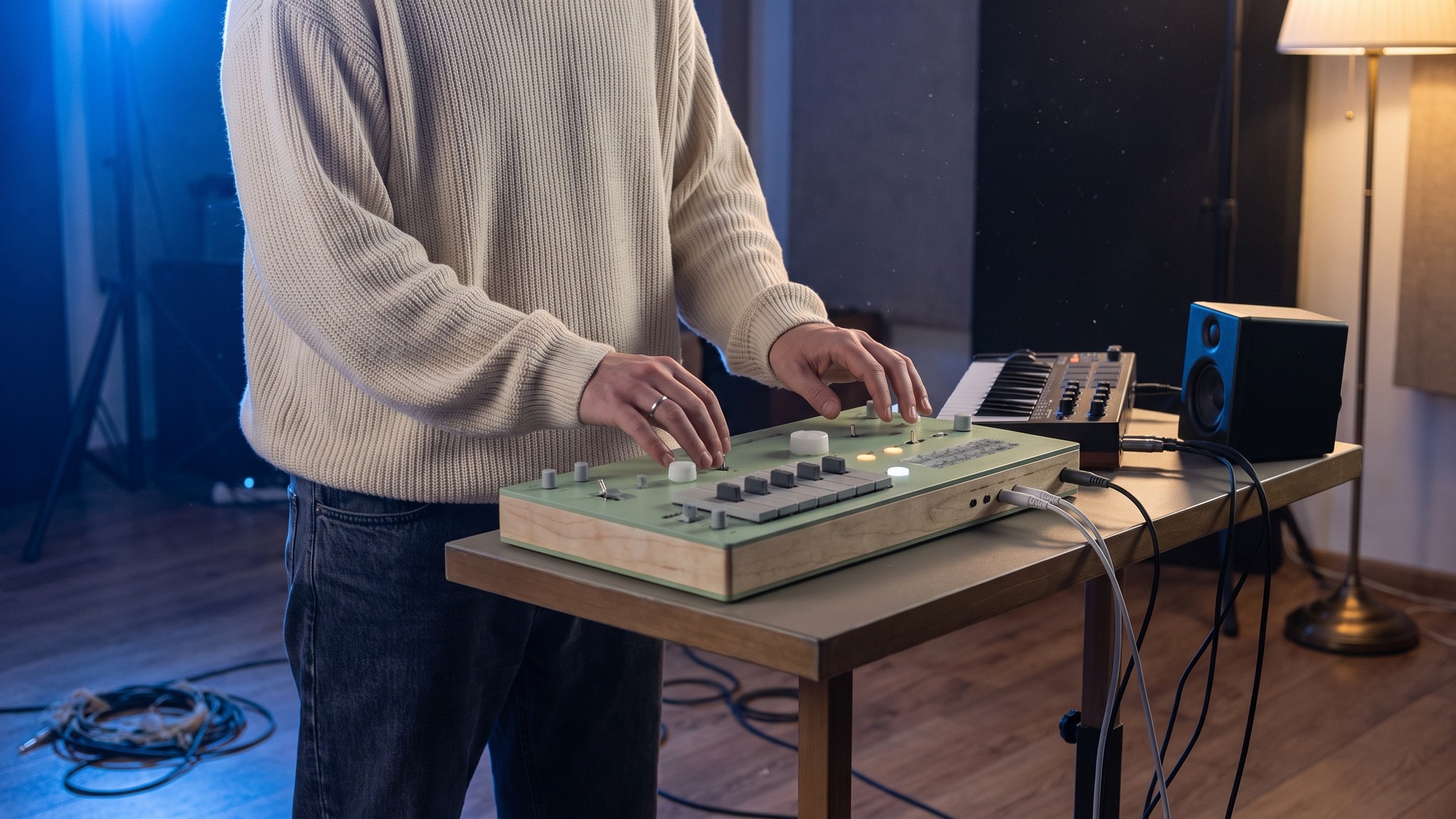 The magic really shines when your fingers finally hit the surface. NOPIA uses responsive capacitive touch sensors for multitouch strumming, letting you roll through individual notes inside a held chord or bend pitch chromatically with a smooth, natural glide. It feels organic, expressive, and surprisingly close to playing a traditional acoustic instrument. On the technical side, every single sound module gets its own dedicated MIDI TRS output. This means you can route your bassline to a hardware synth, send your arpeggio to an external sequencer, and keep the pads running internally—all completely independently. Studio producers and live performers finally get a compact hub that respects complex, multi-gear routing without the cable nightmare.
Why it’s quietly becoming a must-have for creative musicians:
- Zero-Theory Chord Navigation: Play in any key using a unified scale-degree grid that never shifts, perfect for beginners and seasoned pros alike.
- Standalone Hybrid Sound: Four rich, professionally tuned modules powered by an onboard engine that needs no computer or external synths.
- Expressive Touch Control: Glide, strum, and chromatically bend chords with fluid finger movements that respond to your natural playing style.
- Independent 4-Channel MIDI Routing: Separate TRS outputs give you full, isolated control over external hardware setups.
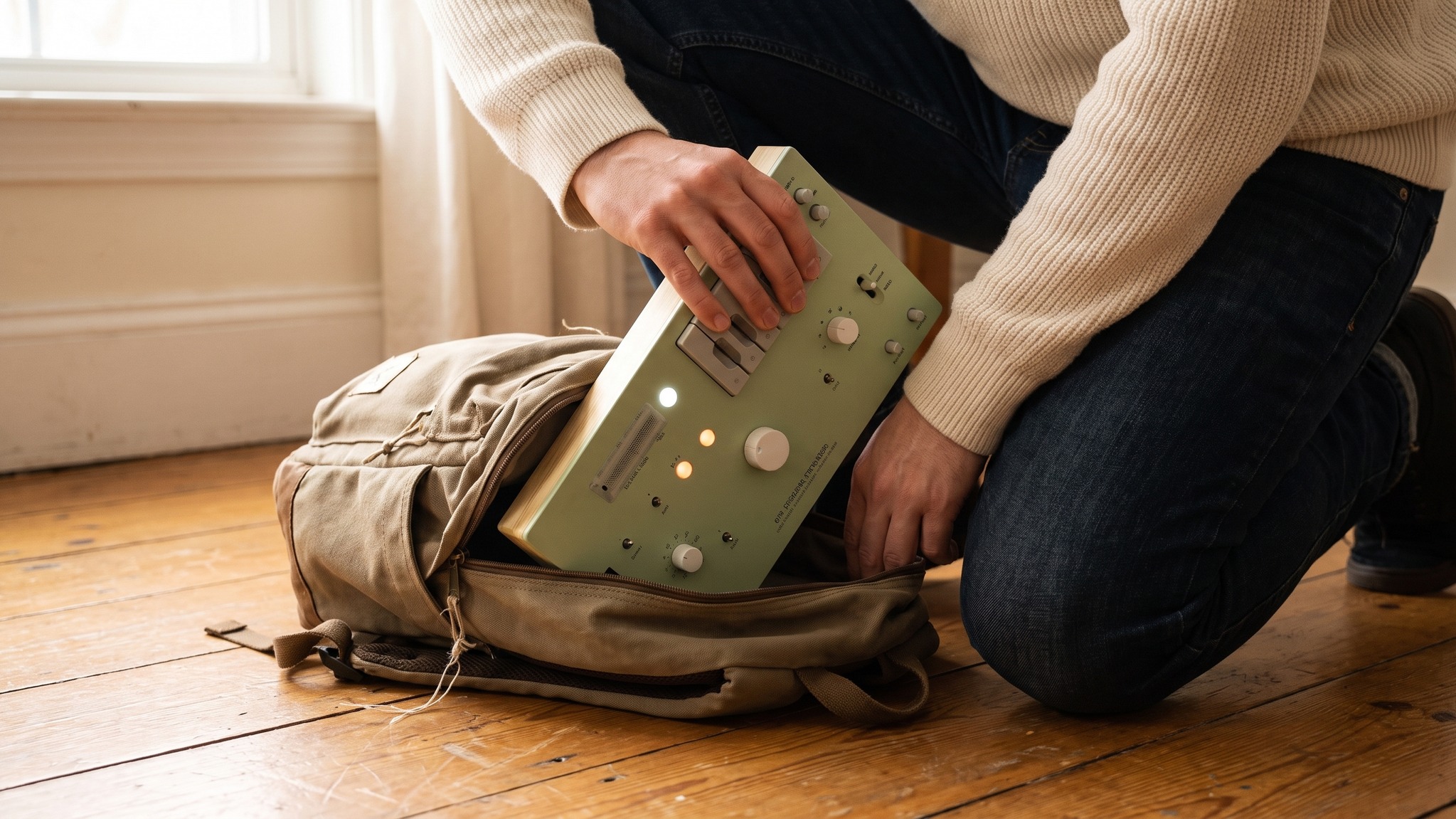
- Backpack-Ready Build: Crafted from premium real wood, measuring just 41.5 x 23 x 3.5 cm. It’s light enough for daily travel, yet rugged enough for touring stages.
Who is NOPIA actually for? If you’re a beatmaker who wants to skip the mouse-and-click workflow, a guitarist looking to translate strumming intuition into keys, or just someone who loves making music but feels held back by theory, this harmony synthesizer bridges that exact gap. Pre-orders officially open on Kickstarter this September 15, and the timing couldn’t be better for anyone ready to upgrade their mobile setup. It’s not just about making chords easier—it’s about feeling the music again.